Food Delivery Workers Gain New Minimum Pay and Insurance Protections in Australia
New minimum standards for the on-demand delivery industry take effect today, 17 August 2026.
The Transport Workers’ Union of Australia has set minimum income rates for employee-like workers (ELWs) and road transport contractors who perform ‘last mile’ delivery work, as well as ELWs who perform ‘on-demand’ delivery work.
An Expert Panel for the road transport industry made the Interim On-Demand Delivery Employee-like Worker Minimum Standards Order on 11 August 2026. The Order takes effect from 17 August 2026.
The Fair Work Commission said the Order covers employee-like workers who perform ‘on-demand’ delivery work and the operators of digital platforms that facilitate or arrange that work.
The Order covers eligible workers engaged through digital platforms to collect and deliver food, beverages and grocery items. It does not apply to ELWs using vehicles with a carrying capacity of more than one tonne.
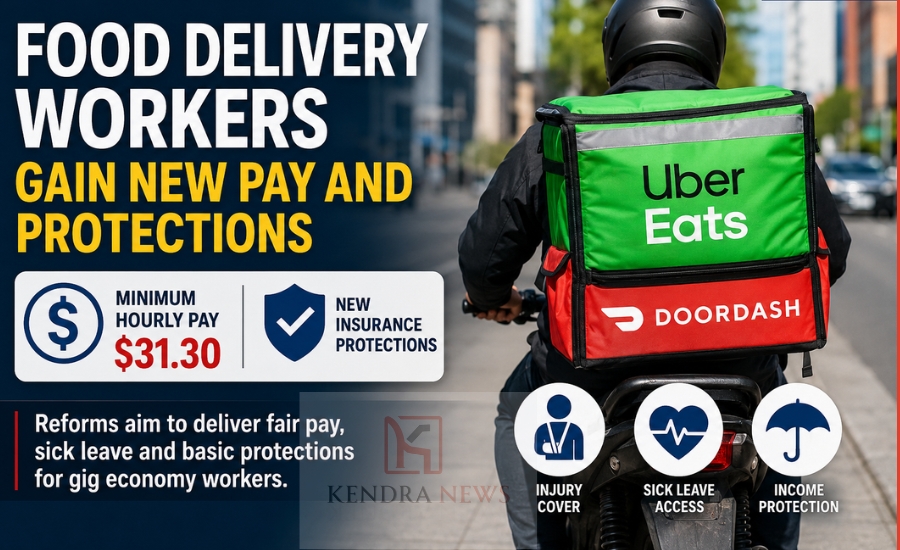
Minimum rates start at $31.30 an hour
The most significant change under the new standards is the introduction of minimum rates for eligible delivery workers.
From 17 August to 31 December 2026, the minimum rates depend on the type of vehicle used:
| Vehicle type | Minimum rate |
|---|---|
| No vehicle, bicycle, e-bike or e-scooter | $31.30 per hour |
| Motorbike or motorised scooter | $31.50 per hour |
| Car or van with a carrying capacity of up to one tonne | $32.00 per hour |
These minimum rates are subject to future adjustments, including annual wage review increases.
Fair Work Ombudsman Anna Booth urged workers and businesses covered by the Order to learn about the new minimum standards through the Fair Work Ombudsman’s online information.
“With the new minimum standards order now in effect, on-demand delivery workers are entitled to minimum rates, dispute resolution processes, a right to unpaid time away, and more,” Ms Booth said.
A new safety net for gig delivery workers
Previously, for ELWs accepting delivery jobs through digital platforms, income generally depended on the delivery work completed, the rates paid and incentives offered by the platform.
The new Order establishes a minimum income guarantee for this payment model.
The minimum standard is not calculated based on all the time a worker is logged into an app. Instead, it is calculated based on engaged time. This generally begins when a worker accepts an order and ends when the engagement is completed.
If an on-demand delivery worker’s income falls below the applicable minimum earnings during an earnings period of up to 21 days, the Digital Labour Platform Operator must pay the difference.
For eligible on-demand delivery workers, the new standards mean that ELWs are now covered by a legally enforceable minimum standards framework.
Source: Fair Work Ombudsman/ Government of Australia
https://www.fwc.gov.au/hearings-decisions/major-cases/minimum-standards-orders-
ms20241-ms20242-ms20243