Australia Tightens Import Restrictions on Nepali Food Products Over Biosecurity Concerns
Australia has temporarily tightened import restrictions on several food and agricultural products exported from Nepal after pests were detected in shipments and concerns emerged over the authenticity of fumigation documents.
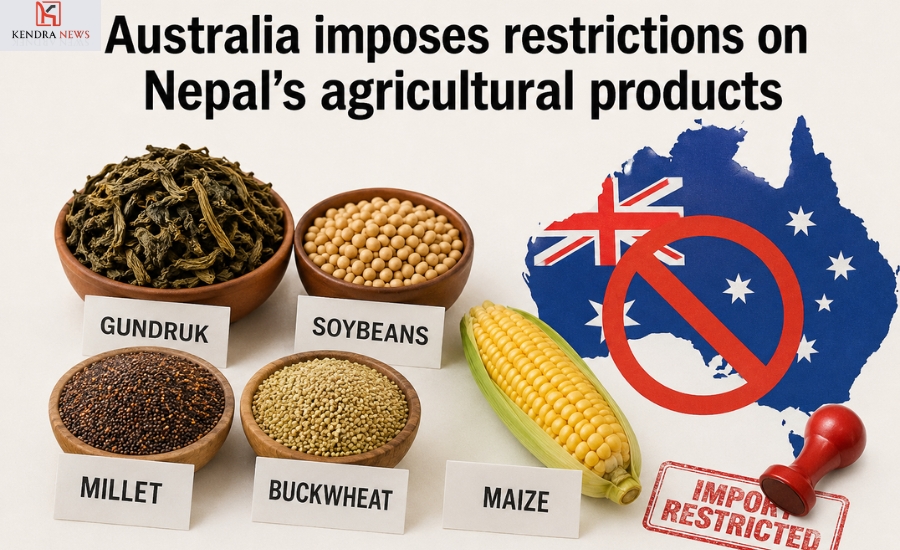
The affected products include traditional Nepali food items such as fermented leafy greens (gundruk), millet, soybeans, buckwheat, maize, and other agricultural commodities commonly consumed by the Nepali community in Australia.
According to Nepali quarantine officials, the action was taken after Australia’s National Plant Protection Organization (NPPO) raised concerns about whether exported goods had undergone proper fumigation treatment in line with international biosecurity standards.
Nepal currently lacks Australia-approved fumigation facilities. Since 2021, many Nepali exports destined for Australia have reportedly been transported to Kolkata, India, for treatment before export certification was issued from Nepal.
However, officials say investigations uncovered serious irregularities in the process. Some exporters and treatment providers were allegedly found issuing questionable documentation, including certificates claiming goods had been treated before the products had physically arrived at treatment facilities. Concerns were also raised about packaged products being certified without proper procedures.
Australian authorities have informed Nepal that they can no longer rely on the existing certification system unless internationally accepted standards are fully met. Australia has proposed two options for Nepal moving forward: either establish approved fumigation facilities within Nepal or ensure that Indian authorities issue official re-export phytosanitary certificates for products treated in India.
Nepali officials acknowledge that monitoring every shipment in India is not currently practical, while Indian agencies have reportedly been unwilling to assume full certification responsibility for Nepali exports.
In response, the Government of Nepal has initiated plans to establish an internationally compliant fumigation and treatment facility inside the country. Officials say procurement processes for approved equipment are already underway, with the goal of completing the facility within the current fiscal year.
The restrictions are expected to affect Nepali exporters, grocery import businesses, and members of the Nepali diaspora in Australia who rely on imported traditional food products. Analysts say the development also highlights broader challenges in Nepal’s agricultural export certification and quality-control systems.
Source:NPPO
First source of Published : Onlinekhaber.com