
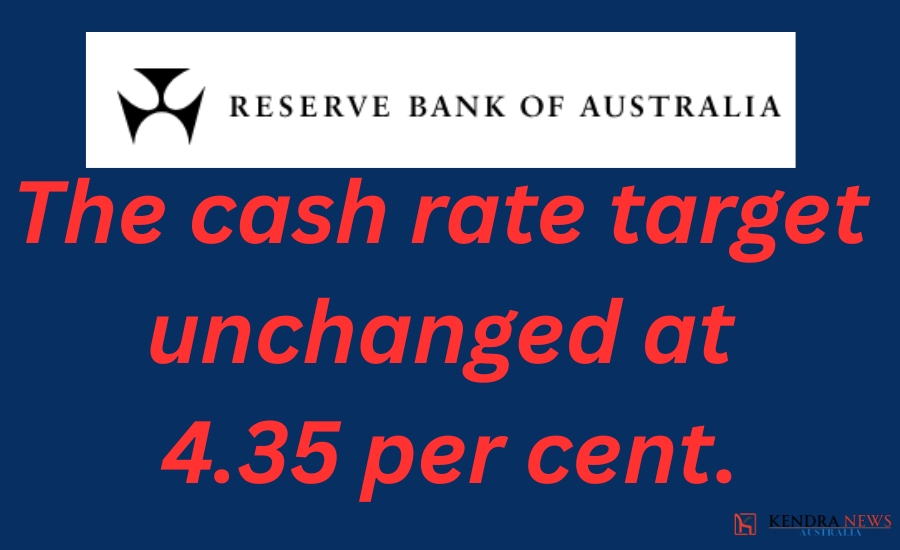
Reserve Bank of Australia Holds Interest Rates at 4.35% as Inflation Risks Persist
Reserve Bank of Australia’s Monetary Policy Board has left its benchmark cash rate unchanged at 4.35%, opting to assess the impact of three earlier interest rate increases while warning that inflation remains uncomfortably high and further tightening may still be required.
In a unanimous decision announced on Tuesday, policymakers said inflation had risen significantly in the second half of 2025 and remained above desired levels despite signs that economic activity is beginning to slow.
The Board cited ongoing global energy market disruptions linked to the conflict in the Middle East as a major source of inflationary pressure. Although oil prices have eased in recent weeks, energy and commodity prices remain elevated compared with levels before the conflict, contributing to higher costs across the economy.
“Inflation is still too high,” the Board said, noting that some businesses have already increased prices to offset rising costs, while others are considering similar measures.
Economic indicators suggest previous rate increases are beginning to cool demand. Consumer spending growth has slowed, housing market momentum has weakened, and property prices have declined in some Australian capital cities. However, business investment remains strong and credit conditions continue to support households and businesses.
The Board acknowledged growing uncertainty surrounding both the domestic and global economic outlook. Policymakers warned that prolonged disruptions to global oil supplies could keep inflation elevated for longer than expected while simultaneously slowing economic growth in Australia and its major trading partners.
Despite holding rates steady, the Board signaled that further increases remain possible if inflation proves persistent.
“Monetary policy is well placed to respond to developments,” the statement said, adding that the Board would do what is necessary to restore price stability and maintain full employment, including raising interest rates again if required.
Financial markets are expected to view the decision as a pause rather than the end of Australia’s tightening cycle, with future policy moves likely to depend on inflation, labour market conditions, and developments in global energy markets.
Source: Monetary Policy Board, Monetary Policy Decision No. 2026-15, 16 June 2026..
Reserve Bank of Australia