
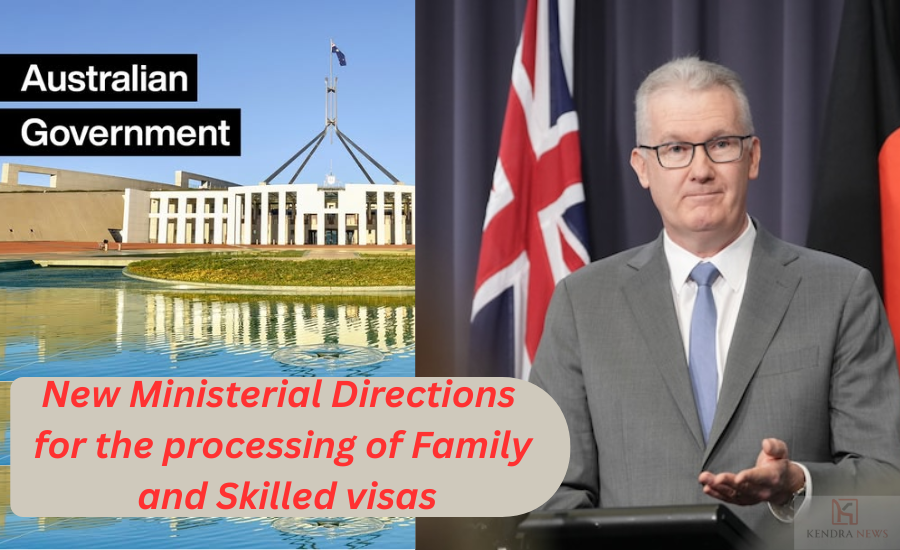
Australia Reshapes Visa Processing Priorities, Giving Greater Preference to Onshore Applicants
The Australian Government has introduced new visa processing priorities that give greater preference to applicants already in Australia, as part of changes to the country’s skilled and family migration programs.
The changes took effect on 25 July 2026 through new Ministerial Directions, including Ministerial Direction 119 (MD 119) for certain skilled visas and Ministerial Direction 120 (MD 120) covering National Innovation Visa applications.
According to the Australian Department of Home Affairs, the new arrangements are designed to align visa processing with government policy priorities, including supporting Australia’s migration objectives and reducing Net Overseas Migration.
Under Ministerial Direction 119, skilled visa applications are prioritised according to both the applicant’s occupation and their location at the time of application.
Applications supporting Australia’s law enforcement and defence interests receive the highest priority. The next major priority category covers construction, healthcare and teaching occupations where the applicant is in Australia at the time of application.
Other applicants who are already in Australia receive the next level of priority, while other applications lodged by people outside Australia are placed in the fifth and final priority category.
The Department of Home Affairs says MD 119 replaced the previous skilled visa processing priorities under Ministerial Direction 105 from 25 July 2026. The new direction also applies to all applications already on hand, including applications under the Skills in Demand visa program.
The changes affect the order in which applications are processed. They do not mean that offshore applicants are no longer eligible to apply for the relevant visa programs.
National Innovation Visa under separate direction
Ministerial Direction 120 establishes a separate processing framework for Class BX, including the National Innovation Visa (subclass 858).
The National Innovation Visa is designed for highly talented individuals who can make a significant contribution to Australia. Applicants are assessed under the requirements and priorities established for the visa program.
Family migration priorities also reshaped
The government has also introduced new arrangements for the processing of Family visa applications under Ministerial Direction 117.
The broader policy shift gives greater consideration to whether applicants are already in Australia when determining processing priority.
The Department of Home Affairs says the new directions form part of the government’s broader approach to managing migration levels while ensuring Australia’s migration program continues to support key economic and policy priorities.
For migrants and prospective applicants, the changes mean that occupation, visa subclass and whether an applicant is in Australia or overseas can affect the priority given to their application.
Applicants should check the current processing priorities for their specific visa subclass before relying on general claims about processing times or priority.
Official sources: Australian Government, Department of Home Affairs.