Government of Victoria Passes Multicultural and Multifaith Reforms, New Body to Start in October
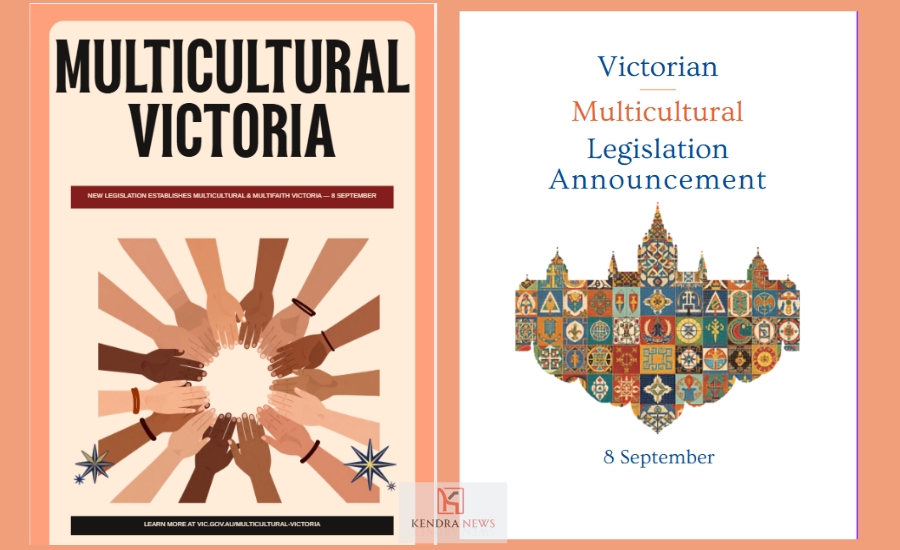
The Victorian Parliament passed new multicultural legislation on 8 September. The reform will change how the government works with multicultural and multifaith communities and will establish a new statutory entity called Multicultural and Multifaith Victoria.
Multicultural and Multifaith Victoria will start operating on 1 October 2026. The Victorian Government said the reform will give multicultural and multifaith communities a more independent voice in government. It will also strengthen how community views are reflected in government policies, services and grants. Victoria is home to people from more than 300 ancestries. Victorians speak more than 290 languages and follow more than 200 faiths. Minister for Multicultural Affairs Paul Edbrooke said, “This legislation sends a clear message: multiculturalism is one of Victoria’s greatest strengths. Every Victorian should feel safe, valued and free to express their culture, heritage and faith.”
VIC GoV
A New Statutory Entity Will Bring Together Existing Multicultural Functions
One of the main changes is the establishment of Multicultural and Multifaith Victoria. Multicultural and Multifaith Victoria brings together the portfolio’s community engagement, policy and grant delivery to ensure that community voices better influence government policy and grants for multicultural and multifaith communities. These functions were previously delivered by the Victorian Multicultural Commission (VMC) and the Multicultural Affairs Division in the Department of Premier and Cabinet. This will create a more direct connection between community feedback and government action. Multicultural and Multifaith Victoria will also have new functions. These include strengthened whole-of-government reporting to drive outcomes for multicultural and multifaith communities, and supporting community safety planning for multicultural and multifaith communities following emergencies or serious global or local adverse events. Multicultural and Multifaith Victoria will establish regional engagement groups to represent all regions of Victoria. The groups will be independently reviewed every four years to ensure they remain effective. Government departments will also need to develop Multicultural Action and Inclusion Plans every four years. These plans will set out actions to improve services and outcomes for multicultural and multifaith Victorians.
Multicultural Coordinator General and Two Deputy Coordinators General to Lead the New Statutory Entity
Multicultural and Multifaith Victoria will be led by a Multicultural Coordinator General and two Deputy Coordinators General. One of the two Deputy Coordinators General must be from regional Victoria. The Multicultural Coordinator General will undertake multiple core responsibilities.
-
represent and promote the interests of multicultural and multifaith communities
-
advise government on how to best deliver government services, policies and grants
-
support communities’ participation in the social, cultural, economic and political life of Victoria
-
consult widely with communities about their needs, experiences and priorities
-
support and provide advice on community safety planning activities in relation to multicultural and multifaith communities
-
coordinate whole-of-government reporting on action plans to improve government services for multicultural and multifaith Victorians.
An independent group of advisors to Multicultural and Multifaith Victoria will be established. This will be known as the Multicultural Community Advisory Group. Its members will actively participate in community events, consultations, and government forums.
Recruitment for these roles is underway. VIC Multiculture
Language Services and Multicultural Principles to Change
The new legislation will also give language services a stronger place in Victoria’s multicultural framework. The changes recognise interpreting and translation services as essential for people who need to access government services in their language. The Victorian Government said every Victorian, regardless of their language background, should be able to meaningfully engage with government services, make informed decisions and receive fair treatment. Under the new legislation, the Minister for Multicultural Affairs will be able to direct certain public sector organisations to use VITS LanguageLoop. However, this will not apply automatically to all government organisations. Before VITS LanguageLoop can become the first provider of choice for an organisation, the Minister must undertake a Regulatory Impact Statement, consult with the relevant portfolio Minister and issue a declaration. Existing language service contracts will continue until they expire. Only public entities covered by a declaration will be required to use VITS LanguageLoop. Private sector organisations cannot be directed to use the provider. Some public entities, including integrity agencies and Parliamentary Departments, are also excluded from mandatory use, although they may choose to use the service voluntarily. If VITS LanguageLoop cannot provide or declines a required service, affected departments and entities will still be able to use another provider. The legislation also introduces another new multicultural principle by recognising the unique status of Victoria’s First Peoples. Multiculture Languages of VIC