538 Australian Councils Unite to Demand $3.5 Billion Federal Funding Boost at National General Assembly
538 Australian Councils Unite in Canberra to Demand Fairer Federal Funding
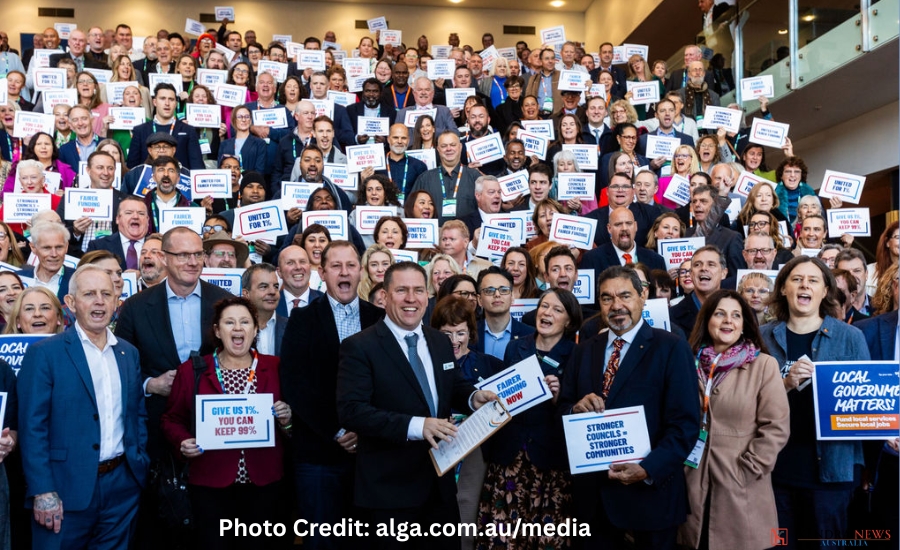
CANBERRA, Australia — In a powerful demonstration of national unity, all 538 local councils represented at the National General Assembly (NGA) in Canberra have called on the Australian Parliament to urgently restore Financial Assistance Grants to 1 per cent of national taxation revenue, warning that councils across the country are facing growing financial pressures that threaten essential community services and infrastructure.
Delegates from metropolitan, regional, rural and remote councils unanimously endorsed an emergency motion demanding fairer federal funding and backed a joint letter to be presented to every member of the House of Representatives and Senate.
The letter, signed by presidents of local government associations from every state and territory, seeks an immediate increase of approximately $3.5 billion in untied funding and calls for a stronger, long-term funding partnership between the Federal Government and local councils.
Councils Facing Increasing Financial Pressures
Australian Local Government Association (ALGA) President Mayor Matt Burnett said local governments are being asked to deliver more services while operating with limited financial resources and decreasing funding certainty.
“Financial sustainability is not an abstract discussion for local government. It is about whether councils can keep doing the job our communities expect us to do,” Mayor Burnett said.
“Councils are responsible for the roads, bridges, libraries, pools, parks, footpaths, stormwater systems, waste services and community facilities Australians rely on every day.
“We are also the first people communities call when something goes wrong, whether that is a local road failure, a disaster, a planning issue or a service disruption.”
Mayor Burnett said councils play a critical role in maintaining community infrastructure, supporting economic activity and responding to emergencies, yet many are struggling to meet growing community expectations amid rising costs.
“Councils are increasingly being asked to do more with less funding certainty, less flexibility, limited revenue capacity and less ability to plan for the long term,” he said.
Push to Restore Funding to 1 Per Cent
A key focus of the emergency motion is the restoration of Financial Assistance Grants to 1 per cent of national taxation revenue.
According to local government leaders and unions, the value of Financial Assistance Grants has steadily declined over the past three decades. In 1996, the grants represented approximately 1 per cent of Commonwealth taxation revenue. By 2026-27, that figure had fallen to just 0.49 per cent.
Local government representatives argue this decline has significantly reduced councils’ ability to maintain infrastructure, deliver services and respond to community needs.
Mayor Burnett said Financial Assistance Grants are unique because they are untied, allowing councils to allocate funds according to local priorities rather than being restricted to specific federal programs.
“Financial Assistance Grants are not just another grant program. They recognise that no two communities are the same and trust councils to make decisions based on local needs,” he said.
Impact on Communities Across Australia
Council leaders warned that the funding shortfall is having consequences beyond local government operations.
They argue that inadequate funding affects national productivity, housing development, freight efficiency, liveability and disaster resilience.
“When councils cannot maintain local infrastructure, productivity suffers. When roads and bridges deteriorate, freight suffers. When essential facilities and enabling infrastructure are delayed, housing delivery and liveability suffer,” Mayor Burnett said.
“This is not just a local government problem. It is a national problem, and it requires a national response.”
The challenges vary across Australia.
Rural and remote councils face vast geographic areas, ageing infrastructure, smaller populations and limited ratepayer bases. Meanwhile, rapidly growing urban councils are struggling to keep pace with demand for roads, drainage systems, parks, waste services and community facilities needed to support housing growth.
Despite these differences, council leaders say the underlying issue remains the same: increasing responsibilities without a corresponding increase in sustainable funding.
Support from Local Government Leaders Nationwide
The call for fairer funding received strong support from local government association presidents across Australia.
Local Government Association of NSW President Mayor Darcy Byrne said many regional communities are nearing breaking point.
“The financial crisis in Local Government is leaving many regional communities in particular at breaking point. That’s why we are all united in demanding that enough is enough. This must be fixed,” Mayor Byrne said.
Local Government Association of Tasmania President Mayor Mick Tucker said councils remain on the frontline of service delivery but are struggling to keep pace with increasing demands and costs.
“Local Government is on the frontline of delivering essential services and infrastructure for Tasmanian communities, but the current funding model is no longer keeping pace with growing demand and cost pressures,” Mayor Tucker said.
Western Australian Local Government Association President Mayor Mark Irwin AM said untied funding provides councils with the flexibility needed to address local priorities and changing community needs.
Municipal Association of Victoria President Cr Jennifer Anderson warned Victorian communities are already feeling the impact of declining federal funding through delayed infrastructure projects and stretched council services.
South Australian Local Government Association President Mayor Heather Holmes-Ross said fairer funding is vital to ensure councils can continue providing the infrastructure and services communities rely on every day.
Local Government Association of the Northern Territory President Cr Peter Pangquee BM highlighted the unique challenges faced by councils serving some of Australia’s most disadvantaged and remote communities, warning that continued underfunding would deepen existing inequities.
Union Support for Funding Reform
The emergency motion also received strong support from council worker unions.
Australian Services Union (ASU) National Secretary Emeline Gaske said local government employees play a crucial role in keeping communities functioning.
“Council workers keep Australian communities running every single day. They collect our bins, run our libraries, maintain our roads and support communities through floods and fires,” Ms Gaske said.
“They do this work professionally and with commitment, but they need councils that are properly resourced to back them up.”
United Services Union (USU) General Secretary Graeme Kelly said declining federal funding has forced councils into difficult financial decisions that directly affect services and local communities.
“The decline in Federal funding has real consequences for the workers and communities who depend on council services. Restoring the 1 per cent benchmark is the single most important thing Canberra can do for local government,” Mr Kelly said.
A Unified Message to Canberra
The National General Assembly concluded with a clear and united message from Australia’s local governments.
Council leaders say restoring Financial Assistance Grants to 1 per cent of national taxation revenue and delivering an immediate $3.5 billion funding increase would provide councils with the certainty needed to maintain infrastructure, support housing growth, strengthen disaster resilience and continue delivering essential services.
As delegates departed Canberra, local government leaders emphasised that their request is not simply about council budgets, but about ensuring communities across Australia continue to receive the services, facilities and infrastructure they rely on every day.
“Local government is united, local government is serious, and councils are calling for action now,” Mayor Burnett said.
Full text of letter to Federal Parliament
Source: Australian Local Government Association (ALGA) – National General Assembly 2026 Media Release.