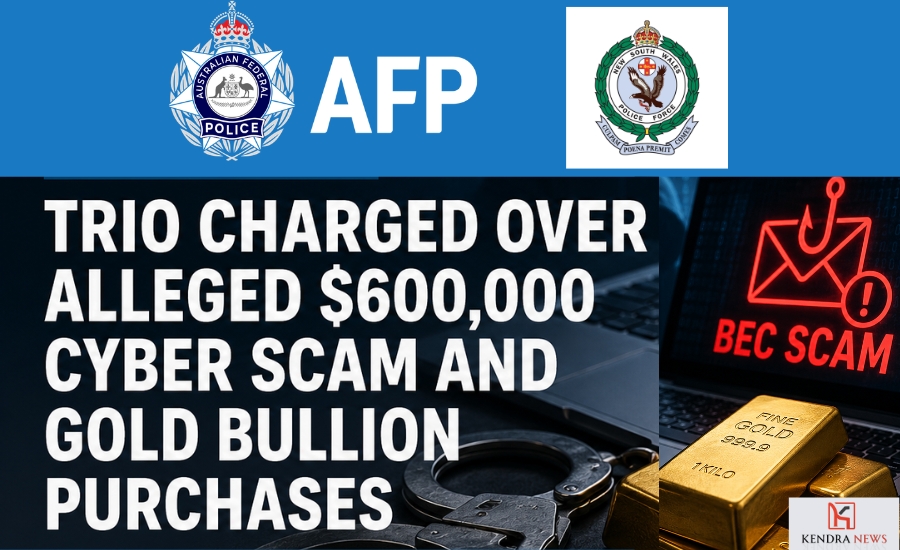
Trio charged over alleged $600,000 cyber scam and gold bullion purchases
Detectives from the NSW Police Cybercrime Squad, working with the AFP-led Joint Policing Cybercrime Coordination Centre (JPC3), have charged three people following an investigation into an alleged $600,000 Business Email Compromise (BEC) scam under Strike Force Downstream.
Police allege a 20-year-old woman purchased about $100,000 worth of gold bullion across five transactions within two weeks using funds suspected to be proceeds of crime.
The investigation began after the National Australia Bank identified suspicious transactions linked to a suspected email scam and provided information to Operation Dolos, a national cybercrime disruption initiative.
About 2.30pm on Thursday, 14 May 2026, detectives arrested the woman at a gold dealership in Sydney CBD. Two men, aged 36 and 29, who were allegedly accompanying her, were also arrested.
Police allegedly seized:
- $34,000 cash from the group’s vehicle
- Multiple mobile phones
- Additional phones and documents during a search of a Zetland apartment
- Gold bullion linked to the investigation
The woman was charged with:
- Recklessly dealing with proceeds of crime greater than $5,000
- Participating in a criminal group contributing to criminal activity
The 29-year-old man was charged with:
- Two counts of dealing with proceeds of crime
- Dealing with identification information to commit an indictable offence
- Participating in a criminal group
The 36-year-old man was charged with:
- Dealing with identification information to commit an indictable offence
- Participating in a criminal group
All three initially appeared before the Bail Division Local Court. The woman and older man were later granted conditional bail, while the younger man remains refused bail.
The matter will return to the Downing Centre Local Court on 28 May 2026.
Authorities say about $300,000 allegedly stolen through the scam has been recovered.
How Business Email Compromise scams work
BEC scams typically involve criminals impersonating legitimate businesses or company finance staff to trick victims into transferring money into fraudulent accounts.
Police recommend:
- Verifying payment requests through trusted contacts
- Avoiding reliance on email-only payment instructions
- Implementing the Australian Cyber Security Centre’s Essential Eight strategies
- Reporting suspicious cyber activity through ReportCyber
Anyone with information is urged to contact Crime Stoppers NSW or phone 1800 333 000.
Source:AFP