New Closing the Gap Investments Announced as Annual Report Released by Australian Government
Umesh Dhakal
KNA- Canberra
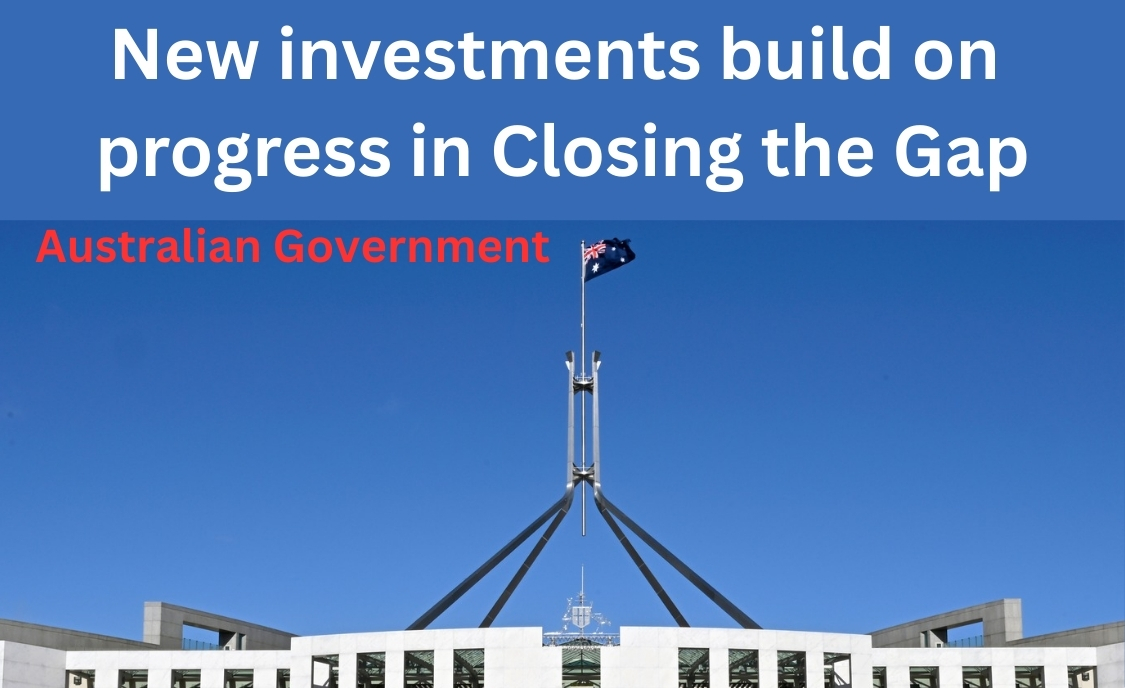
Fresh investments aimed at accelerating progress on Closing the Gap have been announced, alongside the release of the Commonwealth’s 2025 Closing the Gap Annual Report and 2026 Implementation Plan.
It has been confirmed that further funding will be directed toward employment, health, housing and cost-of-living support for Aboriginal and Torres Strait Islander communities, with continued partnership arrangements maintained between the Commonwealth and First Nations representatives through the Coalition of Peaks.
Under the leadership of Prime Minister Anthony Albanese, it has been stated that a renewed focus will be placed on expanding programs that have shown measurable outcomes in remote and regional communities.
The Remote Jobs and Economic Development Program is set to be doubled from 3,000 to 6,000 positions, supported by a $299 million investment. According to government figures, around 1,500 jobs have already been created under the program.
Cost-of-living measures are being expanded through a $27.4 million investment to lift the cap on the Low-Cost Essentials Subsidy Scheme. It has been reported that 113 stores have already joined the scheme, with eligibility extended to all 225 remote stores nationwide. Price reductions are expected to apply to 30 essential grocery items.
An additional $32.7 million has been allocated to extend the Store Efficiency and Resilience Package to 75 more remote stores. The funding is intended to assist with stock preservation and supply challenges during adverse weather conditions and seasonal transport disruptions.
A national strategy titled Our Ways – Strong Ways – Our Voices: National Aboriginal and Torres Strait Islander Plan to End Family, Domestic and Sexual Violence 2026–2036 is being delivered with an immediate investment of $218.3 million. The plan has been described as the first standalone national framework specifically addressing violence against Aboriginal and Torres Strait Islander women and children.
Health system reforms are also being advanced as part of a funding agreement secured at National Cabinet. A combined $450 million contribution — including $250 million from the Commonwealth and $200 million from states and territories — has been committed to improve hospital and primary care services for First Nations communities.
Further health-related measures include a $144.1 million investment in infrastructure upgrades across Aboriginal Community Controlled Health Services, additional support for the Birthing on Country program, and expanded funding for crisis counselling service 13YARN to extend operating hours and introduce text-based support.
It has also been confirmed that Aboriginal Hostels Ltd will receive $48.3 million to continue providing short-term accommodation services, while the First Nations Health Worker Traineeship program will receive a funding boost.
These initiatives build on longer-term commitments already underway, including a 10-year, $4 billion joint investment to address overcrowding in remote Northern Territory communities and $600 million in dedicated housing funding delivered through the Housing Australia Future Fund.
Minister for Indigenous Australians Malarndirri McCarthy has stated that progress will continue to be pursued through partnership-based approaches and community-led solutions.
Representatives of the Coalition of Peaks have indicated that sustained investment in Aboriginal community-controlled organisations will remain critical to achieving long-term and measurable change.
The latest report outlines both areas of improvement and ongoing challenges, with continued collaboration identified as central to advancing Closing the Gap targets in the years ahead.