NSW Extends Youth Bail Laws and Launches $8.4 Million Early Intervention Pilot
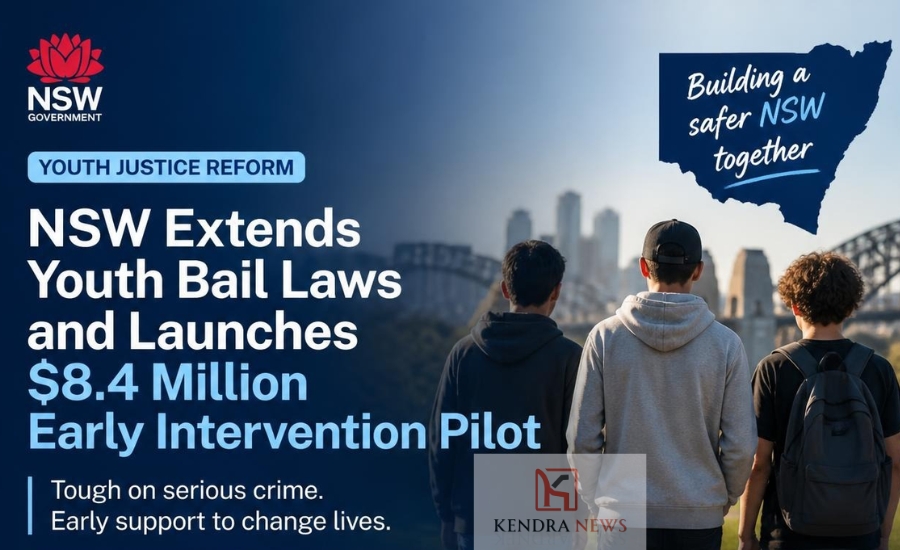
The NSW Government will extend bail laws targeting repeat youth offending and establish a new early intervention pilot for children with complex needs who are already involved in, or at risk of becoming involved in, concerning or high-risk behaviour. The government announced the measures on 15 September 2026, including legislation to further extend section 22C of the Bail Act 2013. The provision applies to young people charged with repeat car theft and break and enter offences. Under section 22C, a bail decision-maker must have a high degree of confidence that a young person will not commit an offence while on bail before bail can be granted. The NSW Government said the provision, introduced in 2024, had helped disrupt high-risk offending by young people. Legislation to further extend the provision was introduced to Parliament on 15 September.
Bail Provision to Remain in Place
The NSW Government said it had always intended to extend section 22C until April 2028. A statutory review of the provision was tabled in Parliament on 15 September. According to the government, the review found that section 22C had helped stabilise youth crime rates in regional NSW. The government said break and enter and motor vehicle offences had declined in regional NSW, while legal proceedings against young people had also decreased. The review recommended extending section 22C to support broader community-based initiatives, including a voluntary diversion pilot in Tamworth.
Support for Children Aged 8 to 13 Before Charges Are Laid
Alongside the bail changes, the NSW Government will introduce a voluntary diversion and early intervention pilot for children aged 8 to 13. The pilot is backed by an $8.4 million investment in the 2026–27 NSW Budget and is expected to be rolled out by early 2027. The first pilot site will be established in Tamworth, with a second site to be announced in the coming weeks. The program will provide support to children with complex needs who are engaged in, or at risk of engaging in, concerning or high-risk behaviour. Children will not need to have been charged with a criminal offence to be eligible. The government said the model is preventative and designed to support children and their families before high-risk behaviour develops into offending. Attorney General Michael Daley said the pathway would identify at-risk young people and support them and their families before offending occurs. The program is also intended to address a longstanding gap in support for children under 10, who are below the age of criminal responsibility and may be too young to access existing programs. Young people who have already been charged with an offence may also be referred to the program to help prevent reoffending. The pathway will operate separately from the criminal justice system.
Individual and Family Support
The model is being finalised by Youth Justice NSW. The government said the program would work with Aboriginal Community Controlled Organisations to provide whole-of-family and culturally responsive support for young people and their families. Caseworkers will work directly with young people, provide one-on-one support and monitor their progress against agreed goals. Family workers will provide practical, day-to-day support in the young person’s household. The pilot responds to recommendation 6 of the independent review into the operation of doli incapax. Doli incapax is a legal principle that presumes children under 14 lack the capacity to be held criminally responsible, subject to the circumstances in which that presumption can be rebutted. The government will also begin consulting with stakeholders on a mandatory diversion pathway, with a model expected to be settled by the end of 2026.
More Than $146 Million Committed to Diversion and Early Intervention
Minister for Youth Justice Jihad Dib said early support could help prevent children from entering the justice system. The NSW Government said it had committed more than $146 million to diversion and early intervention initiatives aimed at providing young people with opportunities, skills and support. The government said the new pathway would expand these programs to support younger people at risk and help them build a more positive future.
Source: NSW Government, Department of Communities and Justice, “Minns Labor Government strengthening youth crime prevention and responses”, 15 September 2026.