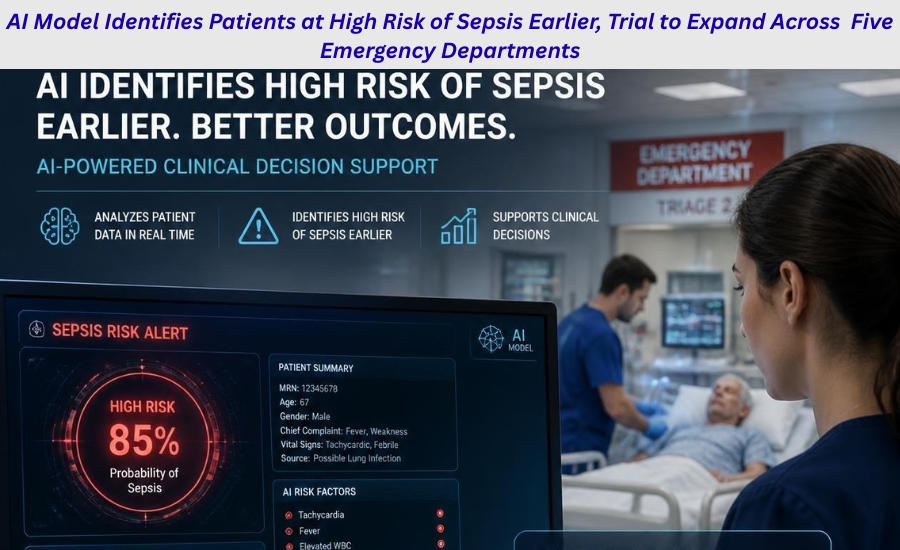
AI Model Identifies Patients at High Risk of Sepsis Earlier, Trial to Expand Across Five Emergency Departments
An artificial intelligence prediction model being trialled in emergency departments in Western Sydney has identified patients at high risk of sepsis around 90 minutes earlier than traditional sepsis triggers. Following the initial trial, the project will expand across five emergency departments over the next two and a half years. Western Sydney Local Health District (WSLHD) announced on 7 September that the
project, called SAFE-WAIT SPACE to sepsis care, uses a real-time artificial intelligence algorithm to identify patients in emergency department waiting rooms who may be developing sepsis. The project has received a 2026 NSW Office for Health and Medical Research Translational Grant Scheme Award.
According to Sepsis Australia, more than 84,000 people per year are impacted by sepsis across the country, with 12,000 deaths annually due to the infection. Early recognition and timely treatment are important in reducing the risk of a patient’s condition worsening.
AI Helps Emergency Department Nurses Identify High-Risk Patients. The AI model uses information entered when patients are first triaged in the emergency department, together with risk factors such as existing health conditions, to calculate their risk of developing sepsis.
The model works as a traffic light system to classify patients as low, moderate or high- risk of sepsis. If the patient returns a high risk of sepsis, this would prompt the waiting room nurse to do a repeat assessment, repeat vitals or administer medication or IV fluids.
Dr Gladis Kabil said, “The model is trying to help the clinician to see, in a crowded waiting room with 40 to 60 patients, those who are quietly developing sepsis.”
The Emergency Department at Westmead Hospital recorded more than 80,000 attendances last year, the highest number on record for the hospital. In busy waiting rooms, identifying patients’ condition as early as possible can be particularly important.
High-Risk Patients Received Antibiotics an Average of 83 Minutes Earlier WSLHD said that during the earlier trial, the AI model identified high-risk patients around 90 minutes before they showed symptoms that a traditional sepsis trigger would detect.
The results also showed that patients identified as high risk received antibiotics an average of 83 minutes earlier, while patients identified as moderate risk received antibiotics an average of 58 minutes earlier.
“If we don't provide treatment early, they can progress to septic shock, which can damage multiple organs throughout the body including the brain, kidneys, heart, and all the vital organs, which can lead to death,” Gladis said.
Trial to Expand to More Sites. The trial will recommence at Westmead Hospital and, over the next two and a half years, will include other sites at Auburn, Blacktown, Mount Druitt and within the Nepean Blue Mountains Local Health District.
The investigator team includes Dr Gladis Kabil, Dr Pramod Chandru, Dr Audrey Wang, Associate Professor Michelle Moscova and Associate Professor Amith Shetty. The project is being conducted with partners from Western Sydney Local Health District, Nepean Blue Mountains Local Health District, eHealth NSW, the NSW Ministry of Health, Western Sydney University and the University of Sydney.
Using AI to recognise sepsis in the ED — NSW Government