Australia’s Human Rights Leader Warns Against Discriminatory Migration Policies
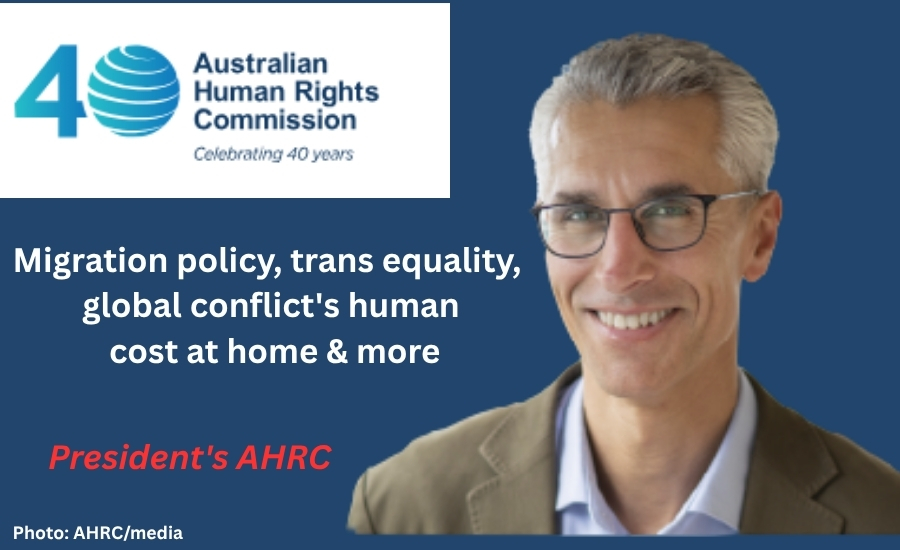
Australia’s Human Rights leadership has issued a strong warning against the resurgence of discriminatory rhetoric in the nation’s migration debate, cautioning that such narratives risk undermining social cohesion and human rights principles.
In a recent statement, the President of the Australian Human Rights Commission highlighted concerns over political and public discourse that increasingly portrays migrants in a negative light. The statement noted that certain groups—particularly migrants from India, Muslim communities, and individuals from regions such as Lebanon and Palestine—have been disproportionately targeted in recent debates.
The President also raised alarm over proposals to limit migration from countries described as being governed by “fundamentalists, extremists, and dictators.” Such characterisations, the statement argued, could apply to a significant proportion of the global population and risk promoting broad generalisations that are inconsistent with Australia’s commitment to fairness and equality.
Drawing on historical context, the statement referenced the dismantling of the White Australia Policy in the 1970s as a defining moment in the country’s shift toward inclusivity. It warned that introducing ideological or values-based tests for migrants could echo exclusionary practices of the past and potentially deny entry to groups who have historically contributed to Australia’s development, including refugees fleeing persecution.
“Scapegoating migrants fuels racism, division, and the risk of violence,” the statement said, calling for a renewed focus on values such as dignity, respect, equality, and mutual support. These principles, it emphasised, should guide migration policy in a modern, multicultural society.
Australia’s migration program has long been recognised as a key driver of economic growth and cultural diversity. Public support for multiculturalism remains strong, with surveys consistently indicating that a large majority of Australians view diversity as a national strength.
The Human Rights leadership urged policymakers to ensure that migration policies remain fair, inclusive, and non-discriminatory, particularly with regard to race and religion. The statement concluded that maintaining these standards is essential not only for protecting the rights of migrants but also for preserving Australia’s social unity and international reputation.
: President of Australia’s Human Rights Commission