
No one was waiting: inside the unpaid safety net catching Australia’s anxious migrants

When Sujan landed in Sydney in 2016, nobody was there to tell him how any of it worked. He had an engineering degree from Nepal and a year or two of experience in water management, irrigation and water conservation. What he did not have was a single contact in the Nepali community in Australia. For the first two years he was not connected to any community group at all.
“I didn’t get any help. I was not connected with anyone when I came,” he said.
So he worked it out by himself. A bakery, then cafes, then restaurants, while he studied for a master’s degree. He finished in 2019, moved to Canberra, and in July 2020 got his first job in his own field. He now works in the parks and conservation sector.
“I did it all by myself, like trial and error, I fell down, I learned something, I stand up and I learned something,” he said.
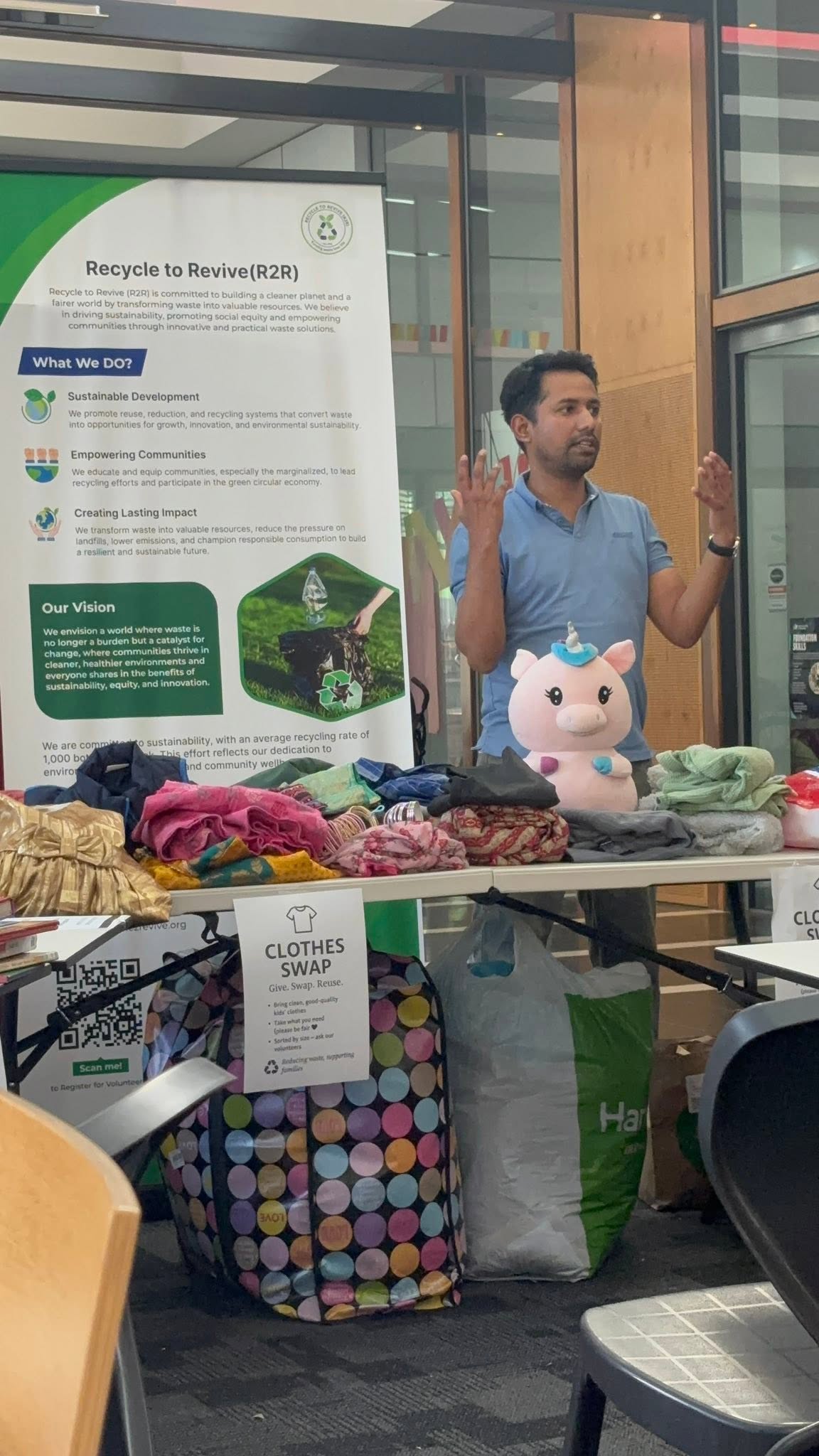
Years later, in the same city, Santosh receives three or four calls a week from Nepali people in trouble. He leads Sanatan Samaj Australia, a non-profit organization serving the Nepalese Hindu community. By his estimate, about 90 per cent of the people who reach him are already at their worst. Only about 10 per cent come while the problem is still starting.
“People only come when things become worse, not at the beginning,” he said.
Between them, these two men cover a gap that nobody is paid to cover. Neither knows the other. Neither is paid anything. It is a community work as a volunteer.And the pressure on the people they help is not easing. Over the past two years, the cost of coming to Australia to study has risen sharply, and the path to staying afterwards has narrowed.
A young community, growing fast
There were 151,000 Nepal-born people living in Australia at 30 June 2022, according to the Australian Bureau of Statistics. The group grew by 120,000 over the previous decade, the third-fastest growth of any country of birth.
It is also the youngest of Australia’s ten largest migrant communities, with a median age of 29.
The flow has not slowed. Nepali students received 31,869 Australian student visa grants in 2024-25, up from 19,397 the year before, according to Department of Home Affairs figures.
That is a community made up mostly of people in exactly the years Sujan and Santosh describe: studying, working, repaying, starting out.
The rules keep moving
The cost of getting in has climbed fast. The base fee for a student visa was $710 until mid-2024. It rose to $1,600 in July 2024, to $2,000 in July 2025, and to $2,500 in July 2026. Since May 2024, applicants have also had to show at least $29,710 in savings to cover a year of living costs.
Staying after graduation has become harder too. From July 2024, the government cut the age limit for the Temporary Graduate visa (subclass 485) from 50 to 35, and most master’s by coursework graduates now get up to two years on it. The English score required was raised earlier that year.
For many graduates, those two years are a countdown. To move from a temporary visa to permanent residency through the independent skilled stream, applicants need enough points from age, qualifications, English and work experience to be invited. The legal minimum is 65. In practice, most non-trade occupations needed 80 points or more in the August 2025 invitation round, according to an analysis by Moya Migration Law, and the number of invitations was roughly half that of the previous round.
“Every round, the number goes up”
Chu knows that countdown well. She is not Nepali, but her situation is one shared by thousands of international graduates, whatever their background.
Chu studied Portuguese for her undergraduate degree in China, then came to Melbourne for a Master of TESOL at the University of Melbourne. After two years here, she knew she wanted to stay. She liked the pace of life in Melbourne and the balance between work and the rest of life, something she did not expect to find if she went home. But TESOL, she said, offered almost no way to stay.
So early this year she started a one-year Graduate Diploma in Early Childhood Education, a field long seen as a pathway to permanent residency because of national shortages of early childhood teachers. She is still studying. She has not yet received her skills assessment, and her 485 visa has about a year left.To support herself, she works full-time in a casual job in Melbourne’s south, Monday to Friday, during ordinary office hours. She asked that her workplace not be named. Her wages cover her rent and living costs.
She checks the invitation results every day, for both the 189 and the 190 visa. Without a skills assessment, she cannot yet enter the queue, so she watches the scores climb from the outside. By her reckoning, two years ago 65 points could be enough. Now she sees numbers closer to 90. When she looks at the new results, what she sees is how many people are pouring in.
Two or three years ago, her first housemate in Melbourne did the same graduate diploma and was granted permanent residency with 65 points. Chu regrets not starting hers two years earlier. Her parents have paid for all of it. Her master’s degree cost the family about 800,000 yuan, roughly A$170,000. The graduate diploma added about $60,000 in tuition.
Her family knows how anxious she is. Most nights, she said, she cannot sleep. She lies awake thinking about how much has been spent, and that it still might not be enough.Her parents tell her to let it go where it goes. If she gets it, good. If not, that is fine too.
She has already prepared herself for the other outcome. If the visa runs out before an invitation comes, she will go back to China. She said she would feel it as a regret: she did everything she could, but the policy changed and the door closed.
The debt arrives with the student
Sujan paid for his own degree with savings from working in Nepal and help from his parents. He is careful to say that was not typical.
“A lot of people come on bank loans, student education loan from Nepal,” he said. “There would be a significant amount of loan that they have to bear to come to Australia.”
He pointed out something easy to miss. The student cannot borrow alone.
“The person himself won’t have that financial status to borrow loan from bank back in Nepal,” he said. “I think the family has to be supported to get a financial loan.” The debt does not arrive in Australia attached to a person. It arrives attached to a household. Nobody repays it while they are studying, he said. Once tuition stops, it takes two to three more years, if everything goes right. “But if the person is not earning well… or if the person got into some kind of gambling addiction… then it might take longer.”
The ones who say nothing
Sujan’s parents knew what his life here looked like. “They completely knew about it,” he said. His family accepted he would struggle for a while.
“Without that struggle, I don’t think you’d be able to sort of grow into that phase,” he said. That openness is not what Santosh usually sees.
“Normally people don’t want to say they have a mental problem,” he said. “That’s the biggest issue, they hide it. They don’t think it has a treatment; they think it ruins their reputation in the community.”
When it starts to go wrong
Santosh puts the turning point in the same place every time. “Usually after their first year here,” he said. “The first year is often fine, but after that, issues with loans, credit card debt, and gambling, poker, start to surface.”
Among the young men who come to him, gambling is the most common problem, alongside drug and alcohol addiction. Students struggle the most, he said, followed by permanent residents and couples. About 60 per cent of those who reach him are men and 40 per cent are women.
What the phone call involves
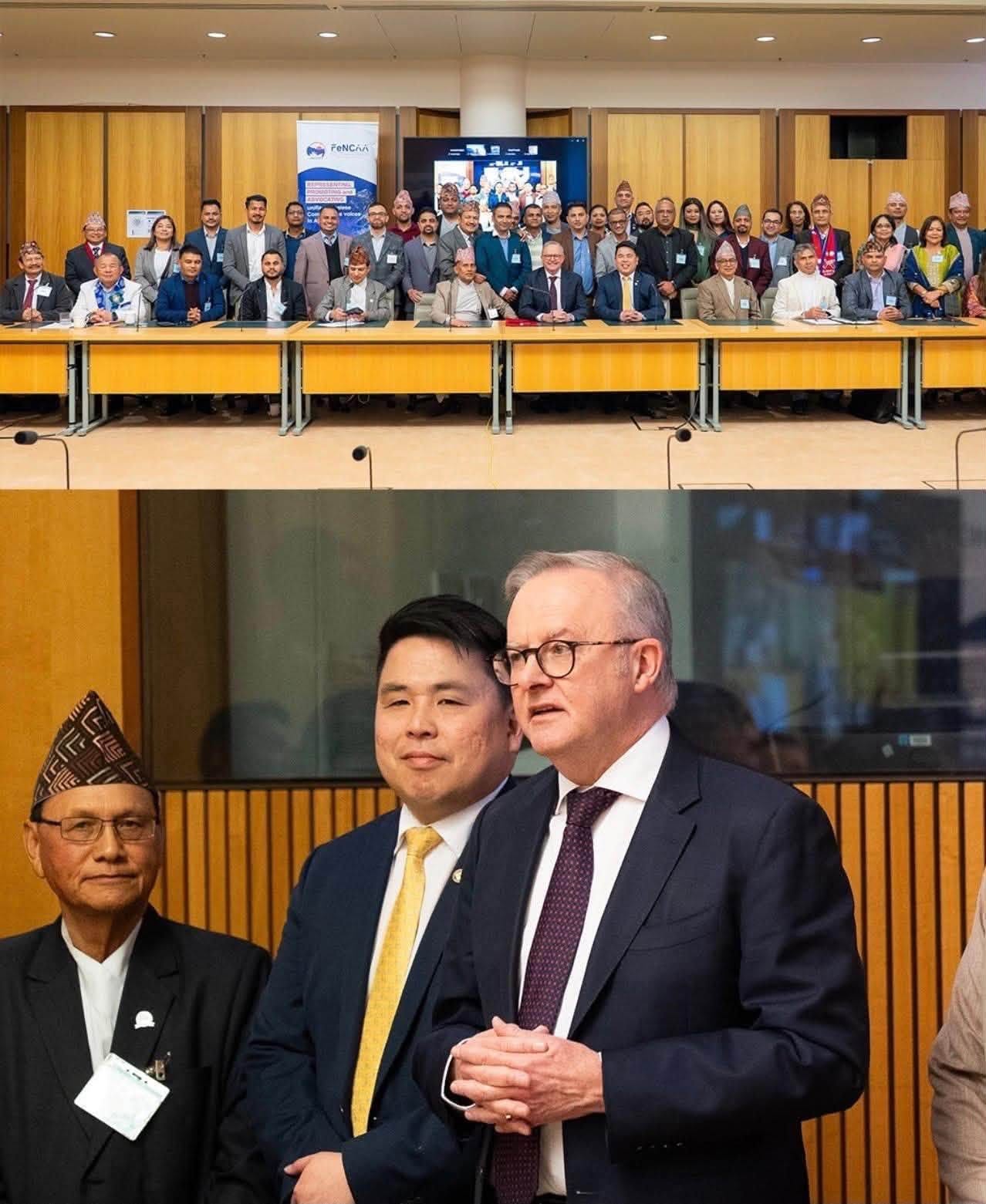
Much of Santosh’s work does not look like crisis work at first. People come for the meditation and yoga the organisation runs, and the rest comes out later. Some come because of a marriage under strain from high costs and long hours. Sometimes a family asks the organisation to perform Hindu funeral rites after a death. Where a problem is just beginning, he and the organisation’s priests, teachers and meditation advisers handle it themselves. Where it is severe, he refers people to government services. He is not a psychologist and says so.
When someone will not talk, he goes further than most volunteers would. “As a leader, I don’t give up on them,” he said. If needed, he contacts the person’s family in Nepal and puts all three of them on one call.
The work is not always safe. A man once broke into his office and damaged it. Santosh called police, and the man was taken for a mental health assessment. After treatment, he came back and apologised. Santosh has done this for six or seven years, alongside a business he runs.
“I don’t get paid for it; it’s completely voluntary,” he said.“Sometimes people call me in the middle of the night during domestic emergencies, and I have to respond immediately and contact the appropriate support services if issues arise.”
A different gap
What Sujan does is not the same work. People come to him wanting to know how to apply for jobs, where to look, what skills they need and what to study to have a future here. His gap is information. Nobody explained the system to him, so he explained it to others.
“I just wanted to make people know that there’s an easier pathway, there’s less struggle pathways,” he said.
A place where someone would notice
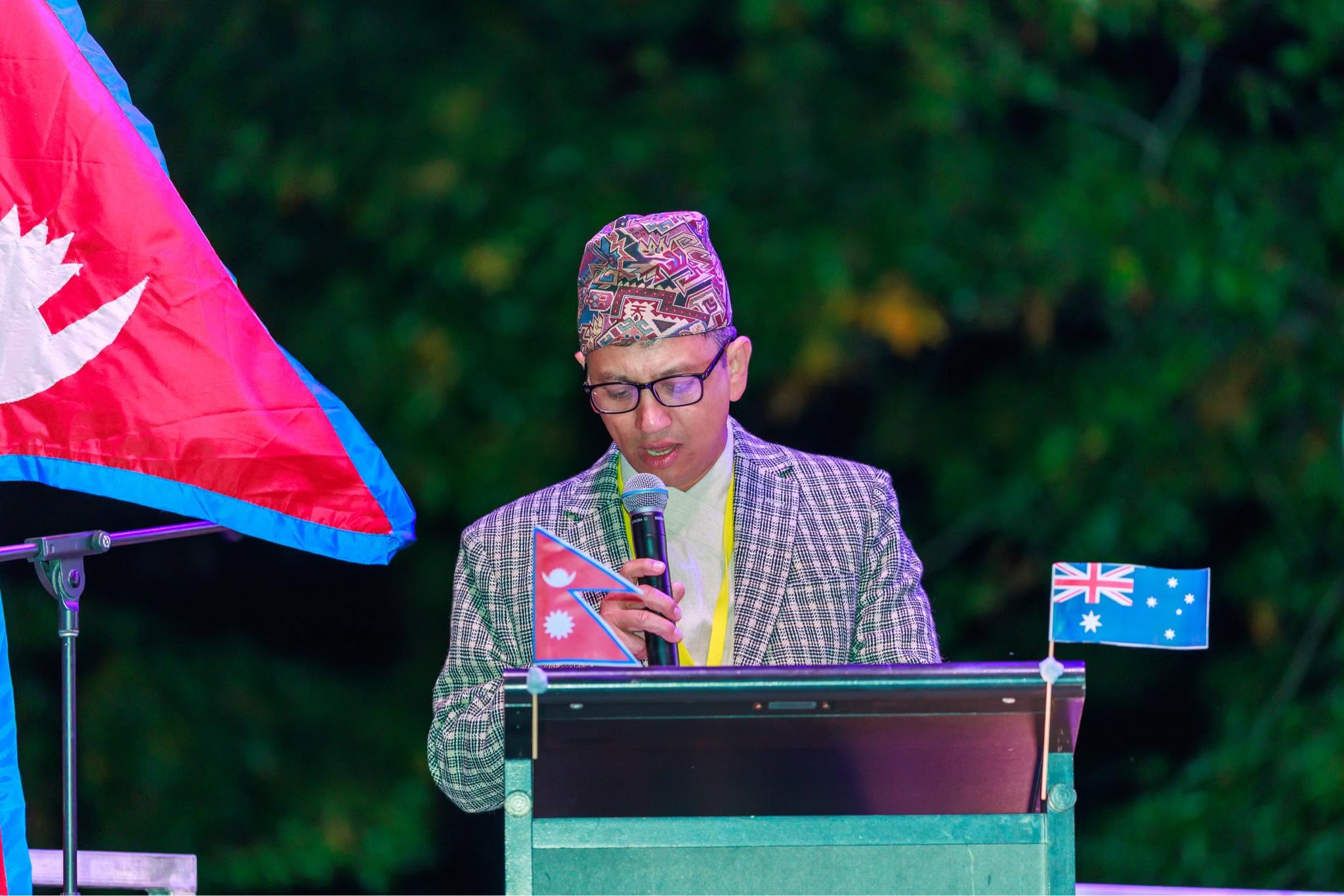
Neither man has a formal system behind him. What exists is two people who were never asked, are not paid, and do it in the hours their jobs leave them. Sujan, asked where home is now, did not choose between the two countries.
“I would say my home would be both,” he said. “Canberra feels like the home to me nowadays… But also Nepal is, because that’s where I grew up and all my families are there.”
Santosh wants a building. Sanatan Samaj Australia has been asking the government for land for a temple for six or seven years. It has not been granted any in Canberra.
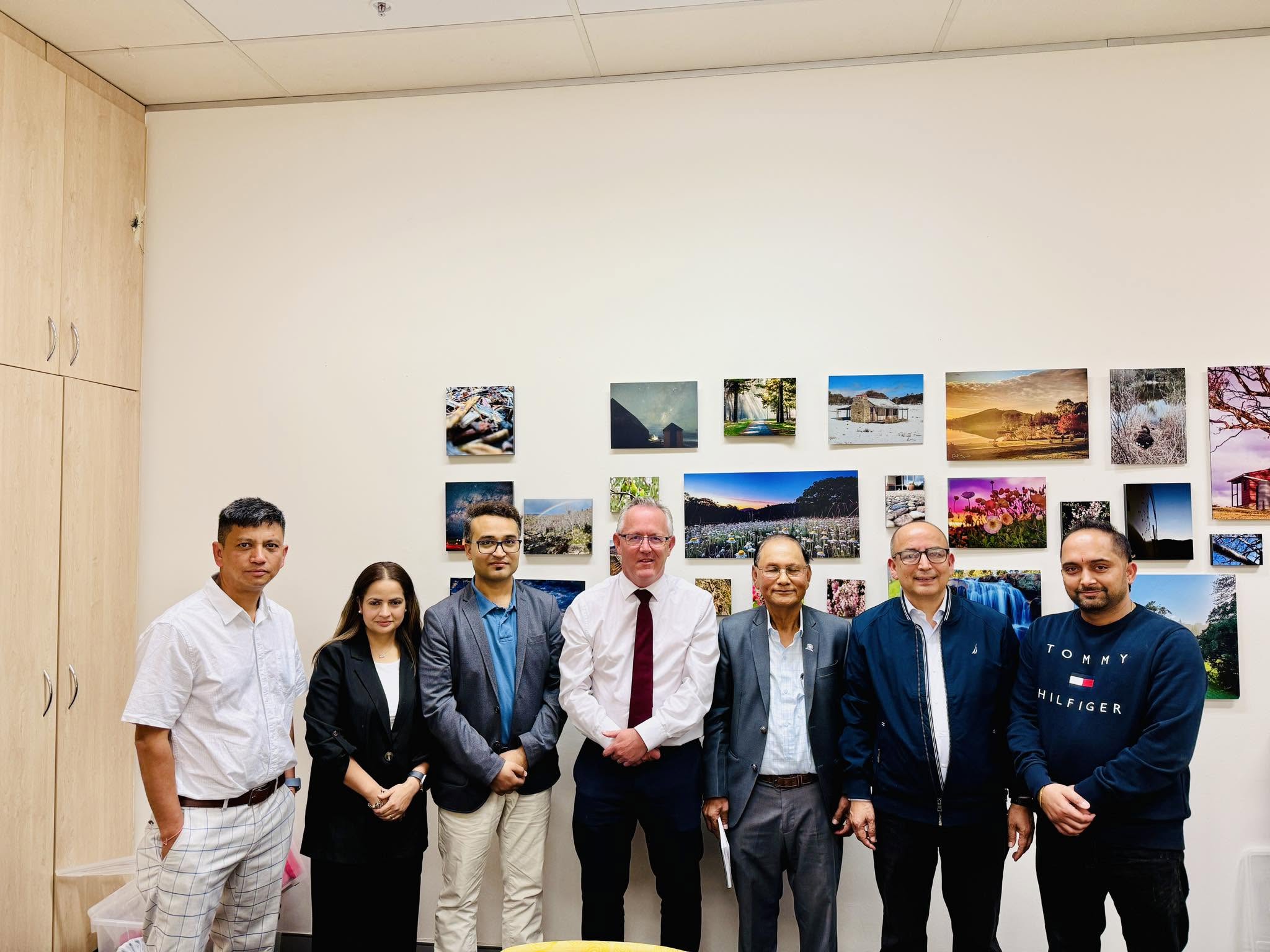
He does not describe it in religious terms. It is for the community. He describes a room in which people can see each other. “In a temple, people can come, talk, and pray,” he said. “If someone is crying or struggling, we can notice and help immediately.”
For graduates like Chu, watching a visa run down, and for students carrying their families’ loans, that is what is missing: somewhere a person in trouble would be seen before it reached the worst.
Most read
 Card Payment Surcharges to End Across Australia from 1 October
 Nearly 2 million Quest customers affected by data breach
 NDIS watchdog closes only one in three complaints on time as backlog nears 13,000
 NT mango growers warn working holiday visa changes could worsen seasonal worker shortages
 Crime falls in Victoria as auditor-general finds no evidence $40m youth program works