Melbourne rents stall as affordability pressures mount

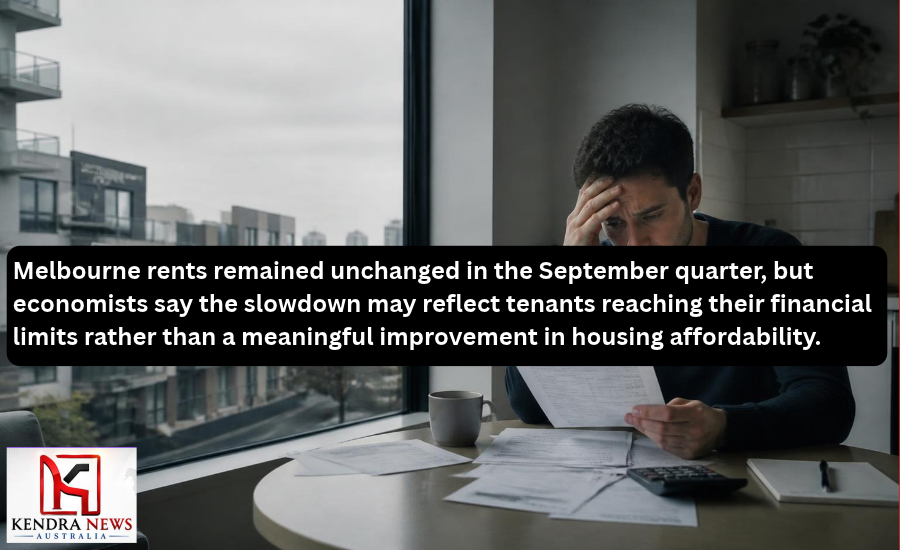
Melbourne rents remained unchanged in the September quarter, but economists say the slowdown may reflect tenants reaching their financial limits rather than a meaningful improvement in housing affordability.
Domain’s September 2026 Rental Report found the median asking rent for both houses and units in Melbourne was $600 a week, with neither recording quarterly growth. Unit rents recorded a second consecutive quarter without growth. Rents still rose over the year. House rents increased by 3.4 per cent, or $20 a week, while unit rents rose by 4.3 per cent, or $25 a week.
Nicola Powell, Domain’s chief residential economist, said tenants’ capacity to pay was becoming a key factor in limiting further increases. “Tenants’ ability to absorb further increases is really the dynamic that is limiting further rental growth,” she told the ABC. Powell also pointed to a gap between vacancy rates and rental growth, with rents no longer rising at the same pace despite continued pressure on the supply of available homes.
“There’s almost a disconnect now between where vacancy rate sits and what is occurring for rental growth,” she said.
Melbourne’s vacancy rate remained at 1.4 per cent in September, unchanged from September 2024 and September 2025, according to Domain.
Nationally, the capital-city vacancy rate rose by 0.1 percentage points to one per cent during the quarter. That remains a tight rental market despite the recent slowdown in price growth. Cameron Kusher, an independent property economist, told the ABC that tenants were increasingly compromising on location to find cheaper accommodation. Some were moving to less desirable areas, sharing a home with other renters or staying with family for longer rather than paying higher rents.
Rental conditions vary between cities. Domain reported that house rents fell by $5 a week in Sydney and $10 in Canberra, reversing gains recorded in the June quarter. Darwin recorded the strongest growth in house rents, rising 5.3 per cent over the September quarter, while Hobart house rents increased by one per cent. Sydney, Darwin and Perth remained among the most expensive capital cities for house rentals. Kusher also questioned whether One Nation’s proposed migration cuts would improve rental affordability.
“I don’t know that that’s enough to significantly improve rental affordability,” he said.
For Melbourne renters, weekly asking rents have stopped rising for now, but both houses and units remain at record median levels. Whether the slowdown continues into the December quarter, or seasonal demand pushes rents higher again, is not yet clear.In Victoria, rent can be increased no more than once every 12 months for most rental agreements. Consumer Affairs Victoria provides information about rent increases, rental rights and dispute resolution, and offers an interpreter service.
- Cameron Kusher, independent property economist
- Nicola Powell, Chief of Research and Economics, Domain
Source:
- Domain, Rental Report, September quarter 2026
- Consumer Affairs Victoria, renting information
Most read
 Card Payment Surcharges to End Across Australia from 1 October
 Nearly 2 million Quest customers affected by data breach
 NSW Expands Paid Internship Program Across Creative Industries
 Goodwin Aged Care Services to repay $1.39 million after employee underpayments
 NDIS watchdog closes only one in three complaints on time as backlog nears 13,000