
More Than 200 New Doctors Strengthen NT Health Workforce in 2026
Umesh Dhakal
KNA- Canberra
Northern Territory hospitals see increased medical capacity and improved trainee retention across regional and remote locations
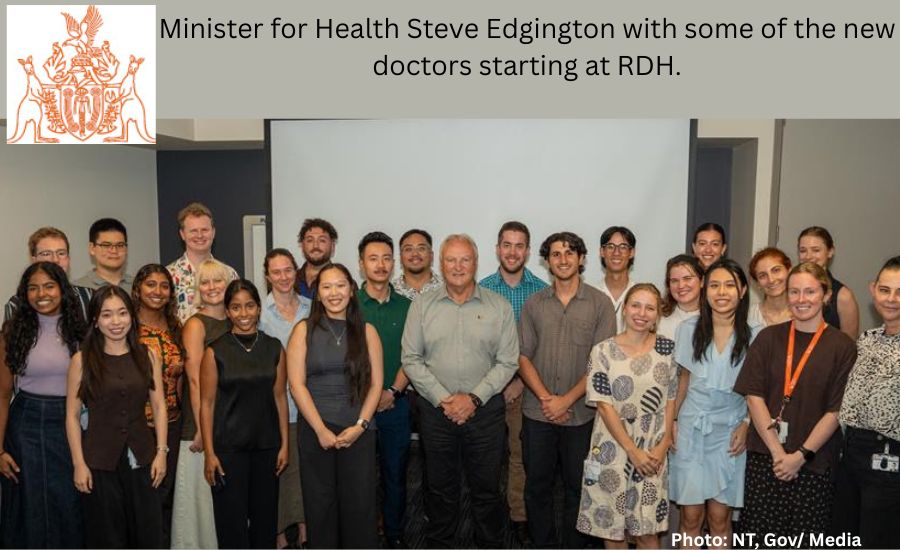
More than 200 new doctors have joined the Northern Territory health workforce in 2026, boosting frontline healthcare services and strengthening medical capacity across metropolitan, regional, and remote communities.
A total of 222 doctors have commenced employment with NT Health and are being deployed across Darwin, Palmerston, Katherine, Gove, Alice Springs, and Tennant Creek. The intake includes interns, Resident Medical Officers (RMOs), and registrars supporting hospital services throughout the Territory.
An improvement in workforce retention has also been recorded, with 78 per cent of doctors in training at Royal Darwin and Palmerston Hospitals continuing their medical training in the Northern Territory from 2025 into 2026. In Central Australia, more than 40 trainee doctors have chosen to remain at Alice Springs Hospital, contributing to workforce stability in the region.
At Royal Darwin and Palmerston Hospitals, the 2026 intake includes 50 intern doctors, 36 RMOs, and 100 registrars. Rotations from this cohort are supporting regional health services, with placements at Katherine Hospital, Gove District Hospital, Alice Springs Hospital, and Tennant Creek Hospital. For the first time, intern doctors from Royal Darwin Hospital are rotating through Alice Springs Hospital.
Additional doctors have commenced directly at Alice Springs Hospital, including 10 interns and 26 RMOs, further strengthening service delivery in Central Australia.
Doctors have relocated from across Australia and overseas to take up positions with NT Health, bringing additional clinical expertise to Territory hospitals. Structured orientation and training programs have been implemented to support doctors transitioning into regional and remote healthcare environments. These programs include cultural safety education, electronic health system training, clinical preparation for complex presentations, and ongoing professional development.
The expanded medical workforce and improved retention rates are expected to enhance continuity of care, workforce sustainability, and access to healthcare services closer to home, particularly in regional and remote communities.
Royal Darwin and Palmerston Hospitals continue to operate as major teaching hospitals, with established partnerships with Flinders NT University, Menzies School of Health Research, and the National Critical Care and Trauma Response Centre.
Source: NT, Gov/ Media realised